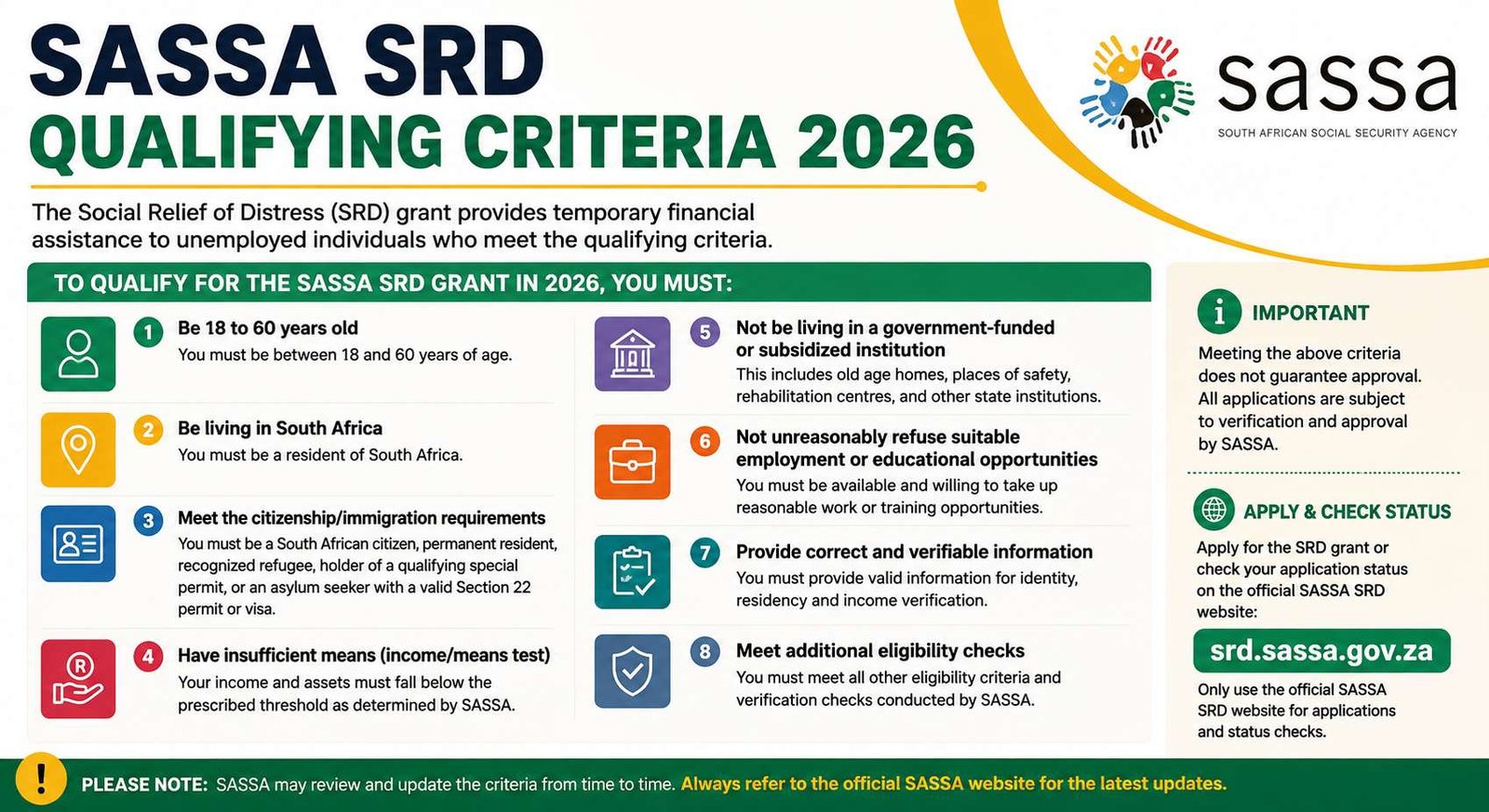
The SASSA SRD grant helps millions of South Africans who have no job and no other income. But not everyone who applies gets approved. SASSA checks every application against strict rules before it pays out the R370 each month. If you want to know if you qualify, this guide explains everything in simple words.
What Is the SASSA SRD Grant?
SRD stands for Social Relief of Distress. It is a small monthly payment of R370 from the South African government. It is meant for people between 18 and 59 years old who are unemployed and have no other way to support themselves.
The government has confirmed that the SRD grant will keep running until 31 March 2027, with a budget of R36.4 billion set aside for it. After that date, the plan is to replace it with a new grant called Basic Income Support (BIS).
You apply for this grant online only, through the official SASSA website at srd.sassa.gov.za. There is no need to visit a SASSA office in person for this specific grant.
SASSA SRD Qualifying Criteria: The Basic Rules
To qualify for the SRD grant, you must meet all of the following requirements. Missing even one of these can lead to your application being declined.
1. Age Requirement
You must be between 18 and 59 years old. If you are younger than 18 or older than 59, you do not qualify for this grant. People aged 60 and above should instead look at the Older Persons Grant.
2. Citizenship or Residency Status
You must be one of the following:
- A South African citizen
- A permanent resident of South Africa
- A recognised refugee registered with Home Affairs
Asylum seekers and undocumented foreign nationals do not qualify for the SRD grant.
3. Income Limit
Your monthly income must be below R624. This is the income threshold SASSA uses to check if you truly need financial relief. Note that R370 is the amount you receive, while R624 is the income limit you must earn under to qualify. These are two different numbers, and mixing them up is a common mistake.
4. Unemployment Status
You must be unemployed. This means you should not be earning a regular salary or wage from a job. If you start working and earning above the income limit, you will stop qualifying for the grant.
5. Not Receiving Other Grants or Income Support
You cannot receive the SRD grant if you already get:
- Any other SASSA social grant (like the Older Persons Grant or Disability Grant)
- Active Unemployment Insurance Fund (UIF) payments
- An active NSFAS bursary or living allowance
There is one exception: receiving the Child Support Grant for your child does not stop you from applying for the SRD grant for yourself.
If you were once registered for UIF but are no longer receiving payments, you may still qualify, though your application might get flagged and need an appeal.
6. Bank Account Verification
SASSA checks your bank account records to confirm your income. This is done automatically through banking institutions, so it helps to make sure your banking details are correct and up to date when you apply.
How SASSA Verifies Your Application
SASSA does not just take your word for it. Every month, your application is checked against several government databases, including:
- SARS (South African Revenue Service)
- UIF (Unemployment Insurance Fund)
- NSFAS
- Home Affairs
- Banking institutions
Because of this monthly re-check, your eligibility status can change from one month to the next. Someone who qualified last month could be declined this month if their situation changes, such as starting a new job or receiving other income.
Documents and Information Needed to Apply
Since the SRD grant application is fully online, you do not need to bring physical documents to an office. However, you will need:
- Your South African ID number (or refugee/permanent residence number)
- A working cellphone number
- An email address (optional but helpful)
- Your banking details or a preferred payment method, such as a retail collection point
Common Reasons Applications Get Declined
Many people get declined even when they think they qualify. Some common reasons include:
- Your details do not match records at Home Affairs
- You are registered for UIF, even if you are not actively receiving payments
- Your bank records show income above the R624 threshold
- You are linked to an active NSFAS allowance
- You already receive another SASSA grant
What to Do If You Are Declined
If your application is declined and you believe you meet the SASSA SRD qualifying criteria, you have the right to appeal. Appeals must be submitted within 90 days through the ITSAA portal (Independent Tribunal for Social Assistance Appeals). If your appeal is also rejected, you can get free legal help from Legal Aid South Africa.
How to Check Your SRD Status
You do not need to visit an office to check your application status. You can:
- Visit the SRD status check page at srd.sassa.gov.za
- Call the toll-free SASSA helpline at 0800 60 10 11
- Send a WhatsApp message to the official SASSA WhatsApp number
Avoiding SASSA Scams
Scammers often target people applying for grants. Keep these safety tips in mind:
- SASSA never charges a fee to apply, check status, or speed up your grant
- Only use websites ending in sassa.gov.za
- Never share your ID number or banking details on Facebook pages or WhatsApp groups
- Report suspected fraud by calling 0800 701 701